The Science of Swimmer’s Ear: Research, Prevention & Treatment
Swimmer’s ear is one of the most common ear conditions affecting people who spend time in the water. Clinically known as acute otitis externa (AOE), it is an inflammation of the ear canal, caused by bacteria or fungi and often associated with significant pain. In most cases, the condition appears quickly after water exposure and is reversible with appropriate care.1,2
Swimmer’s ear is common all over the world and develops across all types of aquatic environments: freshwater lakes and rivers, swimming pools, and the ocean.3,4 The risk is shaped not only by exposure, but by how the ear is managed before, during, and after time in the water.1,2
While the term swimmer’s ear is justified by the incidence increasing fivefold among swimmers,1 it is not a niche problem: an estimated 10% of people will develop it at some point in their lives.2 Studies from the Netherlands and the United Kingdom have shown an annual incidence of approximately 1%,5,6 and in the U.S. it accounted for an estimated 2.4 million health care visits in a single year.7
Despite its prevalence, swimmer’s ear is often approached as an unavoidable side effect of water exposure, rather than a condition affected by behavior, environment, and prevention. Understanding this shift is key for water sports athletes.
Key Takeaways
Short on time? These are the key findings from current research.
- The most common causes of swimmer’s ear are moisture and micro-trauma, which weaken the ear canal’s natural defenses and make infection more likely.
Read more about How Swimmer’s Ear Develops →
- Classic research shows that swimmers face 5× the risk of non-swimmers. The relationship to water exposure is dose-dependent: more time in water equals more risk.
Read more about How Common Swimmer’s Ear Is →
- Swimmer’s ear is not limited to swimmers; it is also common in other major water sports such as surfing, diving, and kayaking.
Read more about Prevalence Across Water Sports →
- Risk is shaped not only by water exposure, but by what happens before and after: trapped moisture, scratching, cotton swabs, and barrier damage all matter.
Read more about Risk Factors →
- Pain is the dominant symptom, often with tenderness when the outer ear is moved or pressed.
Read more about Symptoms and Complications →
- Earplugs help, but fit and material matter. Research shows that not all earplugs are equally effective.
Read more about Prevention Strategies →
- Across a wide range of medical preparations, 65–90% of patients see clinical resolution within 7–10 days.
Read more about Treatment Approaches →
- When communities normalize symptoms as “part of the sport,” prevention suffers.
Read more about Awareness Gaps and Behavior →
How Does Swimmer’s Ear Develop?
Swimmer’s ear develops when the ear canal’s natural defenses break down. Under normal conditions, the skin lining your ear canal is a surprisingly effective barrier. Earwax creates a slightly acidic protective and water repellent coating that discourages bacterial and fungal growth.8–10 But when that barrier is compromised, the canal becomes vulnerable.2
Typically, a couple pathways lead to the breakdown of the barrier:
Prolonged moisture: Repeated immersion and water retention macerates the skin and washes away protective earwax.2 As the ear canal’s acidic environment shifts toward neutral pH, bacteria are able to establish more easily.2
Micro-trauma: Scratching an itch, cleaning with cotton swabs, or excessive friction from equipment creates tiny breaks in the skin that allow bacteria direct access.2,11
Other causes: The ear canal’s protection can also be affected by soapy deposits or alkaline eardrops, allergy, dermatologic conditions, sweating, or stress.1 Excessive or too viscous ear wax can pose a risk as well, as it can obstruct the ear canal, leading to retention of water and debris.8–10
The inflammation: Once the barrier fails, infection may follow. The most common pathogens are Pseudomonas aeruginosa and Staphylococcus aureus, bacteria that thrive in warm, moist environments.1,2 Less commonly, fungal organisms like Candida can be involved, particularly when the ear remains persistently wet or its natural balance has been disrupted.2 Fungal involvement may be more common in chronic otitis externa.1
In most cases, the infection stays localized to the ear canal and responds well to treatment. However, in rare situations, particularly among older adults with diabetes or weakened immune systems, the infection can extend beyond the canal, invading surrounding bone tissue in a serious condition called necrotizing otitis externa.1,2
How Common Is Swimmer’s Ear?
Swimmer’s ear is one of the most common medical conditions among people who spend time in the water, and it’s far more prevalent in water-sports communities than in the general population.5,7,12,13
Otitis externa accounts for more than 500,000 emergency department visits each year in the United States alone.14 44% of ambulatory AOE visits occurred during June–August, showing strong seasonality.7 Children aged 5–14 had the highest visit rates, but 52.8% of visits occurred among adults aged 20 or older.3
A large UK study found a 12-month period prevalence exceeding 1%, with 1.30% of females and 1.16% of males seeking care for otitis externa during the year. Just like in the US study, an increase in prevalence was noted in the end of summer.5
Prevalence Across Water Sports
Many athletes and enthusiasts repeat the same cycle: immersion leading to residual water being trapped in the ear canal, causing irritation and itching, followed by attempts to clean or scratch, which just causes more barrier damage, creating an opportunity for infection to develop.1,2 However, different sports emphasize slightly different risk patterns.
Freshwater swimming: Freshwater carries particular risk. Natural waters add complexity: variable microbial communities, temperature, and often longer head-immersion bouts. Swimming in recreational freshwater lakes has been associated with an odds ratio of 15.5 for developing otitis externa, even in lakes that met national bathing-water standards for fecal indicators. This means that a lake that passed standard safety checks could still present meaningful swimmer’s ear risk.15 A separate study confirmed that freshwater exposure carries stronger associations with otitis externa than ocean or pool swimming, particularly at higher levels of exposure.16
Ocean swimming: Swimmers in general face roughly five times the risk of non-swimmers.17 Seawater is not sterile, and can contain many human pathogens.18 As a result, exposure to seawater can contribute to a range of infections, including acute otitis externa, particularly when the ear canal remains wet for prolonged periods.18
Risk is further influenced by environmental conditions. Warm water, high humidity, and repeated immersion increase the likelihood of infection by promoting bacterial growth and disrupting the ear canal’s natural defenses.18
Pool sports: Swimming pool water is treated to reduce harmful bacteria, but some more resilient microorganisms can still persist.19 Pool-based water sports participants have been shown to carry 2.5 times the risk of ear canal inflammation compared to non-aquatic athletes.11 Notably, pool athletes were affected throughout the year while other patients showed the typical seasonal pattern, suggesting that regular pool exposure drives risk independently of season.11 Competitive swimmers training twice daily are particularly vulnerable, and frequency of pool use has been statistically associated with otitis episodes in children.20,21
Diving: AOE is also a major issue in diving populations. Among recreational scuba divers surveyed at diving symposia, otitis externa was reported as the most frequent disorder, affecting 43.6% of participants.22 In a cohort of military diver trainees, one study reported 30 cases among 162 divers.23
Diving combines prolonged wet exposure with repeated immersion over multiple days, both of which amplify barrier breakdown and infection risk.22,23
Surfing: Otitis externa is a common condition among surfers. Surfing exposes the ear canal to repeated flushing by water, foreign bodies and wave pressure, which all contribute to infection amongst surfers.24,25 Much of the surf-specific literature focuses on surfer’s ear (external auditory exostoses), which is highly prevalent in long-term surfers (and water sports participants in general) and becomes more severe with greater exposure over time.
In surfing cohorts, exostoses have been linked to otological symptoms such as water trapping, pain, hearing problems, and recurrent ear infections. This is logical: as bony growth narrows the ear canal, water and debris are more easily retained and normal drainage is impaired, creating conditions that can favor recurrent otitis externa and other inflammatory episodes.25–28 For surfers with exostoses, swimmer’s ear and surfer’s ear are not separate problems: they interact.
White-water kayaking: Much like surfers, kayakers are susceptible to repeated water exposure and prolonged wet sessions. The most studied ear condition in these groups is exostosis, but that literature explicitly notes that ear canal obstruction may lead to recurrent otitis externa among affected individuals, linking a chronic structural issue to acute infection risk.26
The most practical way to unify these patterns is to treat swimmer’s ear as a predictable exposure injury. The pathogen matters and the risk differs, but the foundation is almost always the same: moisture and a disrupted barrier.2,15–17
Risk Factors for Swimmer’s ear
Swimmer’s ear doesn’t have a single cause; it emerges from a combination of circumstances. For people who spend time in the water, certain risk factors appear again and again in both clinical guidelines and epidemiological research.
Water exposure matters most: As mentioned above, swimmers face roughly five times the risk of non-swimmers, and the relationship is dose-dependent throughout.17 More sessions, more hours, more days in the water all increase risk.15–17 Freshwater exposure appears to carry a stronger association than ocean or pool swimming, particularly at higher exposure levels, likely due to higher concentrations of Pseudomonas aeruginosa in lakes and rivers.15,16
Summer brings peak season: Data consistently show that cases of acute otitis externa spike during summer months, when people spend more time in the water and environmental conditions, warm and humid, favor bacterial growth.2,7 Pool-based athletes are an exception, as they can be affected year-round, independent of season.11
Trauma to the ear canal (including cotton swabs): Studies repeatedly identify self-inflicted trauma or accidental damage from medical procedures as a major trigger, often from cotton swabs used to clean or scratch the ear canal.2,11 Trauma does not just irritate, it changes the skin barrier and creates a direct entry point for infection.2
Underlying skin conditions: Chronic conditions like eczema or psoriasis weaken skin integrity and trigger itching, which leads to scratching, a cycle that increases both susceptibility and recurrence.2 Excessive washing with soap can also raise ear canal pH, neutralizing the acidic environment that normally inhibits bacterial growth.20 Individuals with allergic conditions, including asthma, hay fever, or eczema, face a roughly threefold heightened risk of developing otitis externa compared to those without such conditions.10
Anatomy and obstruction: Narrow ear canals, earwax buildup, foreign objects, or structural changes like exostoses (surfer’s ear) can trap water and debris inside the canal. The longer moisture sits against the skin, the greater the infection risk.2,27
Devices and friction: Hearing aids and other external devices can increase local irritation and moisture retention.2 In water sports, analogous effects can occur with tight hoods, straps, or repeated rub points that irritate the ear.22,23
The bottom line: Two factors dominate your personal risk: how often your ear canal gets wet, and how often it gets irritated or disrupted (whether from cleaning or scratching). The more of both, the more likely swimmer’s ear becomes.2,11
Symptoms and complications
Swimmer’s ear is known for one symptom above all: pain. It’s often surprisingly intense relative to what’s actually visible, with tenderness when the outer ear is moved or pressure is applied, and typically developing within 48 hours of water exposure.2,29 Other typical symptoms include itchiness, ear canal swelling, drainage, and sometimes muffled hearing from debris or swelling narrowing the canal.2,7,29
The impact from these symptoms on daily life can be significant: in one study, swimmer’s ear was disabling enough to cause 36% of patients to interrupt their daily activities for a median of four days, with 21% requiring bed rest.30
For water sports participants, catching symptoms early matters for two practical reasons:
First, mild symptoms often prompt people to self-treat by “cleaning” the ear canal, usually with cotton swabs. This tends to make things worse by damaging the protective skin barrier further.2,11
Second, continuing to get in the water while your ear canal is inflamed can prolong the infection and increase the chance of recurrence. Moisture slows the skin’s ability to heal and maintains an environment where bacteria thrive.1,2
Complications
Potential complications range from bothersome to serious. Locally, swelling and debris can obstruct the ear canal enough to temporarily reduce hearing. In some cases, the infection can spread beyond the canal into surrounding tissue, causing periauricular cellulitis, a more extensive soft tissue infection.2
In rare cases, particularly among older adults with diabetes or weakened immune systems, swimmer’s ear can progress to necrotizing otitis externa. This is a severe condition that involves destructive infection or inflammation of adjacent bone, a condition that can be life-threatening and requires urgent specialist care.1,2
A key warning sign appears consistently across clinical guidance: if symptoms don’t improve with appropriate treatment, or if there’s evidence of systemic symptoms, severe swelling, or symptoms involving the cranial nerves, immediate medical attention is necessary.1,2
Swimmer’s ear should not be confused with middle ear infection (acute otitis media), which affects a different part of the ear. Acute otitis media occurs further in the ear, is most common in young children, and symptoms typically start after a cold.31,32
How to Prevent Swimmer’s Ear
Prevention strategies boil down to protecting the ear canal’s natural barrier and controlling moisture, without over-cleaning.
Keep ears as dry as possible: Prevention guidance emphasizes keeping ears as dry as possible using bathing caps or earplugs.29 After getting out of the water, drying strategies such as tilting and draining the ear, carefully towel-drying the outer ear, and using a hair dryer on the lowest heat and speed at a safe distance are commonly advised as practical methods for moisture-control.29
Avoid putting objects in the ear canal: This includes cotton swabs and isn’t just hygiene advice; it’s one of the most consistent triggers of barrier breakdown in otitis externa.2,11,29
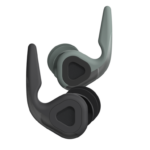
Using earplugs: Earplugs are widely recommended as a prevention tool for swimmer’s ear.1,2,29,33 Unlike cotton swabs and similar objects that are pushed into the canal and damage the protective skin barrier, well-designed earplugs create a seal without damaging the protective barrier. However, not all earplugs achieve this equally well, and poorly fitting plugs may actually increase the risk of otitis externa rather than reduce it.14
Earplug material and design affect real-world protection significantly. One study found that cotton wool mixed with petroleum jelly, a commonly suggested home remedy, had the fastest onset of leakage of any tested material.34 Silicone-based earplugs consistently outperform alternatives.33,34 One study also found that custom-molded hard plugs performed worse than over-the-counter options at longer exposure times, likely because they are shaped to the ear at rest and cannot adapt when the jaw moves.33 Comfort also matters, since plugs that irritate or feel uncomfortable are less likely to be used consistently.2,29,33 The bottom line is that earplugs protect, but material and fit matters.
Consider using ear drops (with caution): Another prevention technique is using acidifying ear drops before or after immersion, at bedtime, or all three.1 This concept fits the known mechanism (loss of the acidic barrier and moisture retention), but it must be used cautiously: official guidance emphasizes avoiding certain drops when there is a perforated eardrum, ear tubes, or other contraindications: consult a healthcare provider if unsure.1,29
In short, a prevention strategy grounded in the research is: Reduce moisture in the ear canal, avoid trauma, use barriers in a way that doesn’t irritate skin and consider ear drops for recurrent infections.2,29,33
Treatment approaches
Swimmer’s ear usually responds well to treatment. Clinical guidelines strongly favor local treatment (ear drops) for uncomplicated cases.1
Ear drops: In most cases, health care providers prescribe antibiotic, fungal or steroid ear drops to treat swimmer’s ear.31 Across a wide range of topical preparations, 65–90% of patients see clinical resolution within 7–10 days, and there is no evidence that any one preparation is significantly superior to another in terms of outcomes.2,14
Getting back in the water: Most people should stay out of the water for 7–10 days during treatment. In mild cases, limited pool use without prolonged submersion may be acceptable. Competitive swimmers sometimes return after 2–3 days of completed treatment or, if using well-fitting ear protection, after pain has resolved.1
Pain management matters: Swimmer’s ear can be intensely painful, affecting sleep and daily function. Effective care includes addressing pain, not just treating the infection.1,2
Oral antibiotics are rarely necessary: For uncomplicated swimmer’s ear, systemic antibiotics are generally not needed and are frequently overused in practice.1,5 They are reserved for cases where infection has spread beyond the ear canal, or for higher-risk patients with conditions like poorly controlled diabetes or weakened immune systems.1,2
If symptoms don’t improve, get reassessed: Recurrent or treatment-resistant swimmer’s ear should be re-evaluated rather than cycling through different drops without guidance.1,2
Antibiotic resistance: Finally, it is important to recognize that treatment is becoming more complex due to antibiotic resistance. Pseudomonas aeruginosa, one of the most common pathogens in swimmer’s ear, has developed resistance to several classes of antibiotics. The increasing prevalence of multidrug-resistant strains poses a growing challenge for treatment, and highlights the importance of appropriate antibiotic use and reliance on effective ear drops whenever possible.19,35–37
Awareness Gaps and Behavior
However common swimmer’s ear is, it isn’t always well understood in the communities most affected by it.
Diving provides a clear example: in a UK survey study designed to assess ear-health awareness and incident prevention in recreational divers, ear problems were widely reported and awareness of guidance was incomplete, only 27% of respondents were aware of UK Diving Medical Committee guidance regarding ear health and diving.16
A related pattern appears in a study of military diver trainees, where most participants did not consider symptoms of pain and itching severe enough to consult a physician, even as they continued diving.14 Active screening in that cohort revealed nearly five times more cases than self-reporting alone. The same dynamic likely occurs across recreational water sports, where high pain tolerance and the desire to stay in the water can delay both recognition and prevention.14,16
This matters because swimmer’s ear prevention is behavior-dependent: moisture management, avoiding ear canal trauma, and using barriers consistently.2,4 If a water-sport community normalizes ear pain and drainage as “part of the sport,” it becomes less likely that people will adopt preventive habits early, especially in multi-day training blocks or travel where the pressure to keep going is high.14,16
Conclusion
Swimmer’s ear is not just an occasional annoyance: it is an outcome of the physiology of the ear canal under repeated water exposure. The research base is consistent on the big picture: AOE is common, seasonal, and strongly associated with aquatic exposure; it becomes more likely as exposure intensity rises; and it is often driven by opportunistic pathogens that thrive when moisture persists and the ear’s protective barrier is disrupted.
For water-sports participants, the most defensible, research-aligned approach is straightforward: protect the ear canal’s barrier from being constantly flushed, minimize moisture time after immersion, and avoid trauma from over-cleaning. When symptoms occur, early appropriate topical treatment, and reassessment if you’re not improving, helps prevent prolonged misery and rare but serious complications.
References
- Rosenfeld RM, Schwartz SR, Cannon CR, Roland PS, Simon GR, Kumar KA, Huang WW, Haskell HW, Robertson PJ. Clinical practice guideline: acute otitis externa. Otolaryngol Head Neck Surg. 2014 Feb;150(1 Suppl):S1–S24. doi:10.1177/0194599813517083. Available from: https://pubmed.ncbi.nlm.nih.gov/24491310/
- Wiegand S, Berner R, Schneider A, Lundershausen E, Dietz A. Otitis externa. Dtsch Arztebl Int. 2019 Mar 29;116(13):224–234. doi:10.3238/arztebl.2019.0224. Available from: https://pubmed.ncbi.nlm.nih.gov/31064650/
- van Balen FA, Smit WM, Zuithoff NP, Verheij TJ. Clinical efficacy of three common treatments in acute otitis externa in primary care: randomised controlled trial. BMJ. 2003;327:1201–1205. doi: 10.1136/bmj.327.7425.1201. [DOI] [PMC free article] [PubMed] [Google Scholar]
- Raza SA, Denholm SW, Wong JCH. An audit of the management of acute otitis externa in an ENT casualty clinic. The Journal of Laryngology & Otology. 1995;109(2):130-133. doi:10.1017/S0022215100129469. Available from: https://pubmed.ncbi.nlm.nih.gov/7706918/
- Rowlands S, Devalia H, Smith C, Hubbard R, Dean A. Otitis externa in UK general practice: a survey using the UK General Practice Research Database. Br J Gen Pract. 2001 Jul;51(468):533–538. PMCID: PMC1314044. Available from: https://pmc.ncbi.nlm.nih.gov/articles/PMC1314044/
- Mustafa M, Patawari P, Sien MM, Muniandy RK, Zinatara P. Acute otitis externa: pathophysiology, clinical presentation, and treatment. IOSR. 2015;147:3–8. Available from: Google Scholar
- Piercefield EW, Collier SA, Hlavsa MC, Beach MJ. Estimated burden of acute otitis externa — United States, 2003–2007. MMWR Morb Mortal Wkly Rep. 2011 May 20;60(19):605–609. Available from: https://www.cdc.gov/mmwr/pdf/wk/mm6019.pdf
- Kelly KE, Mohs DC. The external auditory canal. Anatomy and physiology. Otolaryngol Clin North Am. 1996;29:725-39. Available from: https://pubmed.ncbi.nlm.nih.gov/8893213/
- Boustred N. Practical guide to otitis externa. Aust Fam Physician. 1999;28:217-21. Available from: https://pubmed.ncbi.nlm.nih.gov/10098300/
- Nichols AW. Nonorthopaedic problems in the aquatic athlete. Clin Sports Med. 1999;18:395-411. available from: https://pubmed.ncbi.nlm.nih.gov/10230574/
- Kujundžić M, Manestar D, Cuberović S, et al. Water related otitis externa. Coll Antropol. 2012 Sep;36(3):893–897. Available from: https://hrcak.srce.hr/file/133797
- Russell JD, Donnelly M, McShane DP, Alun-Jones T, Walsh M. What causes acute otitis externa? J Laryngol Otol. 1993 Oct;107(10):898-901. doi: 10.1017/s0022215100124739. PMID: 8263385. Available from: https://pubmed.ncbi.nlm.nih.gov/8263385/
- Agius AM, Pickles JM, Burch KL. A prospective study of otitis externa. Clin Otolaryngol Allied Sci. 1992 Apr;17(2):150-4. doi: 10.1111/j.1365-2273.1992.tb01063.x. PMID: 1587031. Available from: https://pubmed.ncbi.nlm.nih.gov/1587031/
- Jackson EA, Geer K. Acute Otitis Externa: Rapid Evidence Review. Am Fam Physician. 2023 Feb;107(2):145-151. PMID: 36791445. available from: https://pubmed.ncbi.nlm.nih.gov/36791445/
- van Asperen IA, de Rover CM, Schijven JF, Oetomo SB, Schellekens JFP, van Leeuwen NJ, et al. Risk of otitis externa after swimming in recreational fresh water lakes containing Pseudomonas aeruginosa. BMJ. 1995 Nov 25;311(7017):1407– 1410. doi:10.1136/bmj.311.7017.1407. Available from: https://pubmed.ncbi.nlm.nih.gov/8520277/
- Springer GL, Shapiro ED. Freshwater swimming as a risk factor for otitis externa: a case-control study. Arch Environ Health. 1985 Jul-Aug;40(4):202–206. doi:10.1080/00039896.1985.10545918. Available from: https://pubmed.ncbi.nlm.nih.gov/4051573/
- Hoadley AW, Knight DE. External otitis among swimmers and non swimmers .Arch Environ Health. 1975 Sep;30(9):445–448. doi:10.1080/00039896.1975.10666747. Available from: https://pubmed.ncbi.nlm.nih.gov/809013/
- Chang WJ, Pien FD. Marine-acquired infections. Hazards of the ocean environment. Postgrad Med. 1986 Sep 15;80(4):30-2, 37, 41. doi: 10.1080/00325481.1986.11699528. PMID: 3763516. Available from: https://pubmed.ncbi.nlm.nih.gov/3763516/
- Maclean K, Macey D, Needham T. Bacterial Diversity in Dive Sites and the Implications for Antimicrobial Resistance in Diving-Related Otitis Externa. Pathogens. 2022 Jan;11(1):91. doi:10.3390/pathogens11010091. Available from: https://pmc.ncbi.nlm.nih.gov/articles/PMC8777857/
- Reid TMS, Porter IA. An outbreak of otitis externa in competitive swimmers due to Pseudomonas aeruginosa. J Hyg (Lond). 1981 Jun;86(3):357–362. doi:10.1017/S0022172400069114. Available from: https://pubmed.ncbi.nlm.nih.gov/6787118/
- Pantazidou G, Dimitrakopoulou ME, Kotsalou C, Velissari J, Vantarakis A. Risk Analysis of Otitis Externa (Swimmer’s Ear) in Children Pool Swimmers: A Case Study from Greece. Water. 2022;14(13):1983. doi:10.3390/w14131983. Available from: https://www.mdpi.com/2073-4441/14/13/1983
- Gonnermann A, Dreyhaupt J, Praetorius M, et al. Hals-Nasen-Ohren ärztliche Erkrankungen im Zusammenhang mit dem Sporttauchen. HNO. 2008;56:519–523. doi:10.1007/s00106-007-1635-4. Available from: https://pubmed.ncbi.nlm.nih.gov/18210007/
- Wingelaar TT, van Ooij PJAM, van Hulst RA. Otitis externa in military divers: more frequent and less harmful than reported. Diving Hyperb Med. 2017 Mar;47(1):4–8. doi:10.28920/dhm47.1.4-8. Available from: https://pubmed.ncbi.nlm.nih.gov/28357818/
- Taylor KS, Zoltan TB, Achar SA. Medical illnesses and injuries encountered during surfing. Curr Sports Med Rep. 2006 Sep;5(5):262-7. doi: 10.1097/01.csmr.0000306426.16414.52. PMID: 16934209. Available from: https://pubmed.ncbi.nlm.nih.gov/16934209/
- Zoltan TB, Taylor KS, Achar SA. Health issues for surfers. Am Fam Physician. 2005 Jun 15;71(12):2313-7. Erratum in: Am Fam Physician. 2006 Feb 1;73(3):392. PMID: 15999868. Available from: https://pubmed.ncbi.nlm.nih.gov/15999868/
- Moore RD, Schuman TA, Scott TA, Mann SE, Davidson MA, Labadie RF. Exostoses of the external auditory canal in white-water kayakers. Laryngoscope. 2010 Mar;120(3):582–590. doi:10.1002/lary.20781. Available from: https://pubmed.ncbi.nlm.nih.gov/20066729/
- Bart RM, Lau H, Cooper JS. Surfer’s Ear. [Updated 2023 Apr 30. In: StatPearls [Internet]. Treasure Island (FL): StatPearls Publishing; 2025 Jan-. Available from: https://www.ncbi.nlm.nih.gov/books/NBK534874/
- Attlmayr B, Smith IM. Prevalence of ‘surfer’s ear’ in Cornish surfers. J Laryngol Otol. 2015 May;129(5):440-4. doi: 10.1017/S0022215115000316. Epub 2015 Mar 16. PMID: 25772761. Available from: https://pubmed.ncbi.nlm.nih.gov/25772761/
- Centers for Disease Control and Prevention. Preventing swimmer’s ear. Healthy Swimming. Updated May 28, 2025. Available from: https://www.cdc.gov/healthy-swimming/prevention/preventing-swimmers-ear.html
- Sander R. Otitis externa: a practical guide to treatment and prevention. Am Fam Physician. 2001 Mar 1;63(5):927-36, 941-2. PMID: 11261868. Available from: https://www.aafp.org/pubs/afp/issues/2001/0301/p927.html#afp20010301p927-b5
- Swimmer’s Ear (Otitis Externa). Cleveland Clinic. 2024 Available from: https://my.clevelandclinic.org/health/diseases/8381-swimmers-ear-otitis-externa
- Danishyar A, Ashurst JV. Acute Otitis Media. [Updated 2023 Apr 15]. In: StatPearls [Internet]. Treasure Island (FL): StatPearls Publishing; 2026 Jan-. Available from: https://www.ncbi.nlm.nih.gov/books/NBK470332/
- Alt JA, Collins WO. An objective comparison of leakage between commonly used earplugs. Am J Otolaryngol 2012; 33: 469-72. Available from: https://pubmed.ncbi.nlm.nih.gov/22154019/
- Kovoor J, Al-Hussaini A, Backhouse S. Identifying the Optimal Water-Occluding Earplugs: A Scientific Simulation Study. J Int Adv Otol. 2016;12(3):266–270. doi:10.5152/iao.2016.2817. Available from: https://pubmed.ncbi.nlm.nih.gov/27879228/
- Puzniak L., De Pestel D.D., Srinivasan A., Ye G., Murray J., Merchant S., De Ryke C.A., Gupta V. A combination antibiogram evaluation for Pseudomonas aeruginosa in respiratory and blood sources from intensive care unit (ICU) and non-ICU settings in U.S. hospitals. Antimicrob. Agents Chemother. 2019;63:e02564-18. doi: 10.1128/AAC.02564-18. Available from: https://pubmed.ncbi.nlm.nih.gov/30917987/
- Tacconelli E., Carrara E., Savoldi A., Harbarth S., Mendelson M., Monnet D.L., Pulcini C., Kahlmeter G., Kluytmans J., Carmeli Y., et al. WHO Pathogens Priority List Working Group. Discovery, research, and development of new antibiotics: The WHO priority list of antibiotic-resistant bacteria and tuberculosis. Lancet Infect. Dis. 2018;18:318–327. doi: 10.1016/S1473-3099(17)30753-3. Available from:https://pubmed.ncbi.nlm.nih.gov/29276051/
- Hlavsa C.M., Cikesh L.B., Roberts A.V., Kahler M.A., Vigar M., Hilborn D.E., Wade J.T., Roellig D.M., Murphy L.J., Xiao L., et al. Outbreaks associated with treated recreational water—United States, 2000–2014. Morb. Mortal. Wkly. Rep. 2018;67:547–551. doi: 10.15585/mmwr.mm6719a3. Available from: [https://pubmed.ncbi.nlm.nih.gov/29771872/]