Ruptured Eardrum
The risks of high-impact water sports, and how to protect your ears
Understanding Eardrum Rupture
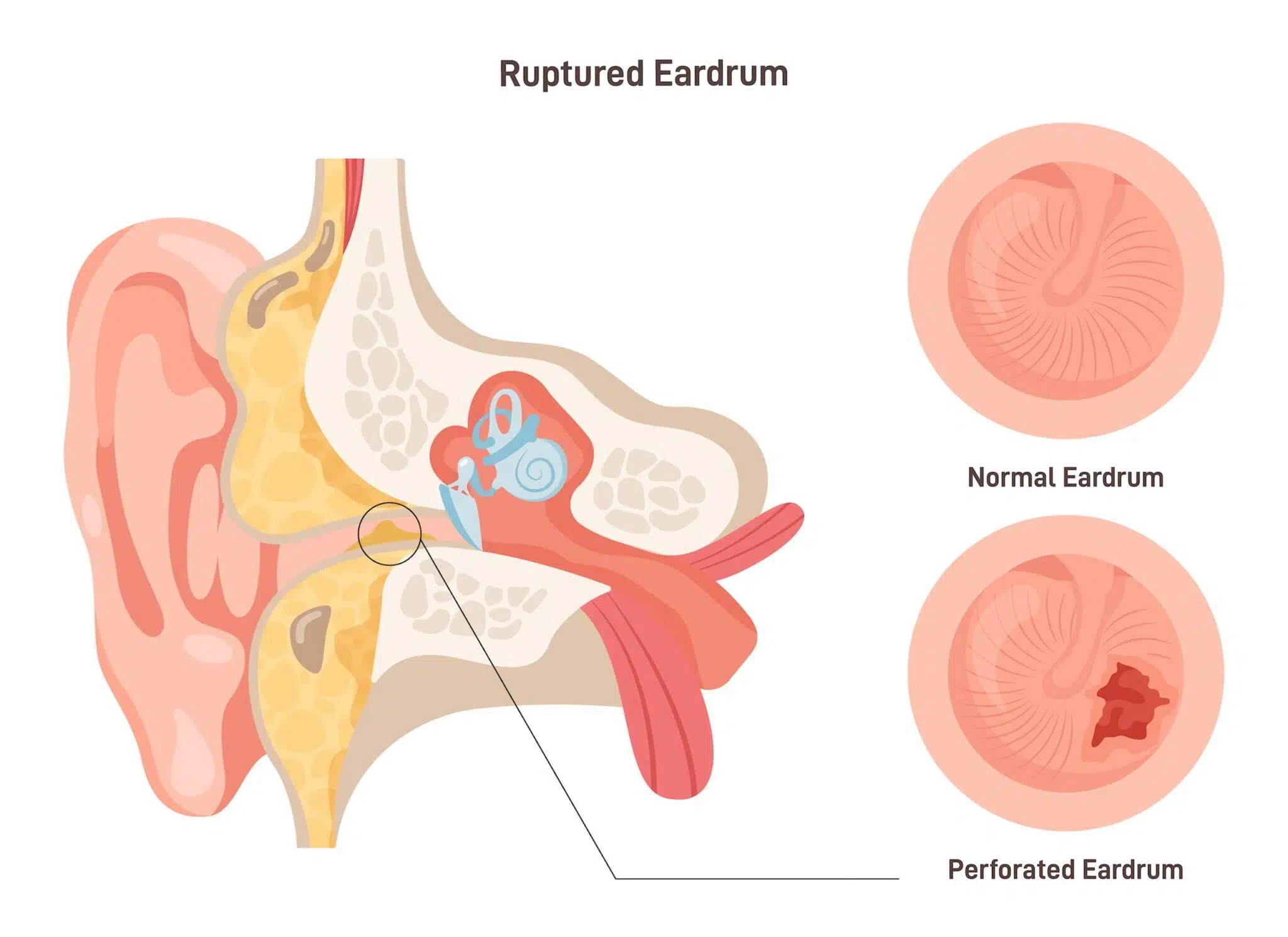
The eardrum is a thin membrane separating the outer ear canal from the middle ear. Its job is to vibrate in response to sound waves and relay those vibrations to the tiny bones of the middle ear, which transmit the signal onward to the inner ear and brain.1
A ruptured eardrum, also referred to as a perforated eardrum and medically known as a tympanic membrane perforation, is a tear or hole in the eardrum. This breaks the barrier between the outer and middle ear, disrupts normal vibration, and can result in hearing loss, pain, drainage from the ear, ringing, or dizziness.1
Most acute perforations heal on their own within a few weeks. But some don’t, and even those that do can cause significant discomfort and, in some cases, serious complications if not managed properly.1
How Does It Happen?
Water sports are well-recognized causes of traumatic eardrum rupture.2 When the ear strikes or is struck by water at high speed, a forceful pressure wave is driven into the ear canal and can rupture the eardrum on impact.3 The largest and thinnest part of the membrane, called the pars tensa, is the most vulnerable region and comprises only a few cell layers.1

Symptoms to Know
An acute eardrum rupture often makes itself known immediately. Common symptoms include:
- sudden ear pain, which may ease quickly after the rupture
- hearing loss or muffled sound
- drainage from the ear, sometimes bloody immediately after injury
- ringing in the ears (tinnitus)
- dizziness or vertigo
Some smaller or older perforations cause few or no symptoms and are only found during a routine ear exam. Even a silent perforation, however, leaves the middle ear exposed to water and bacteria, which raises the risk of infection significantly.1
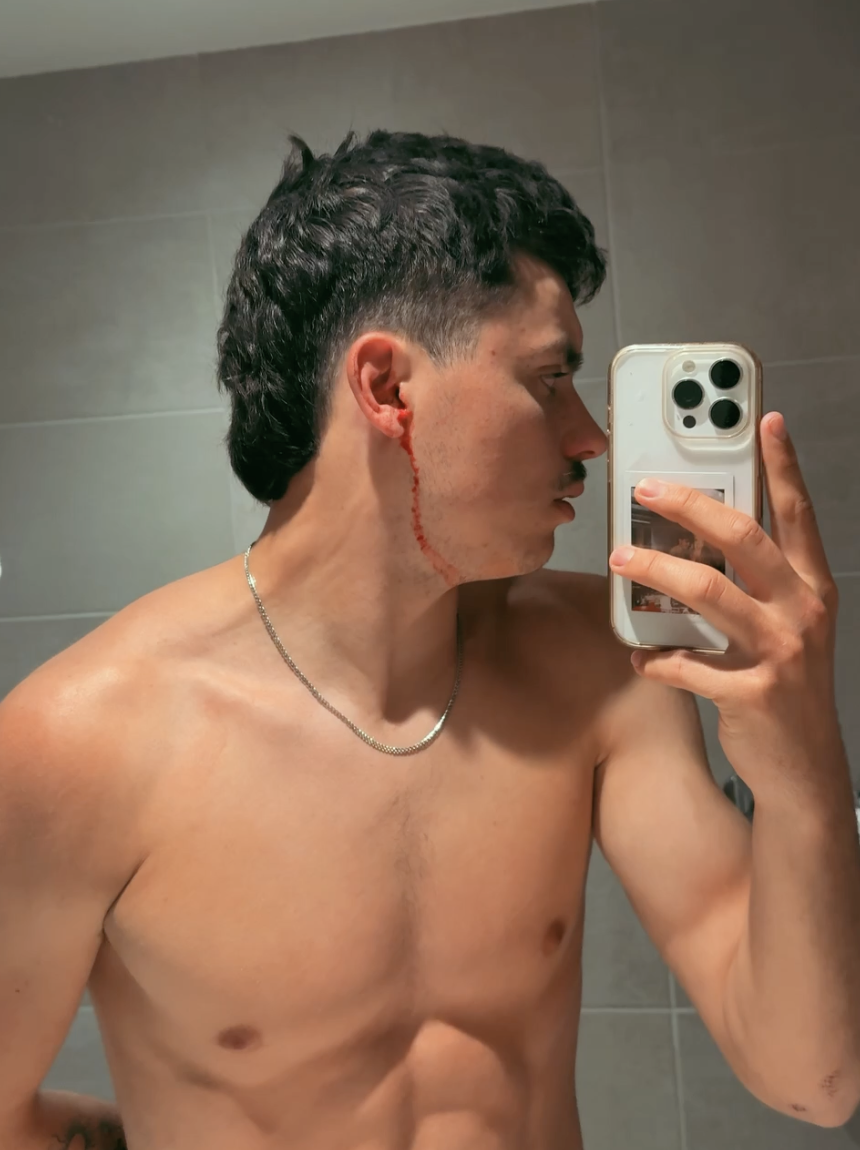
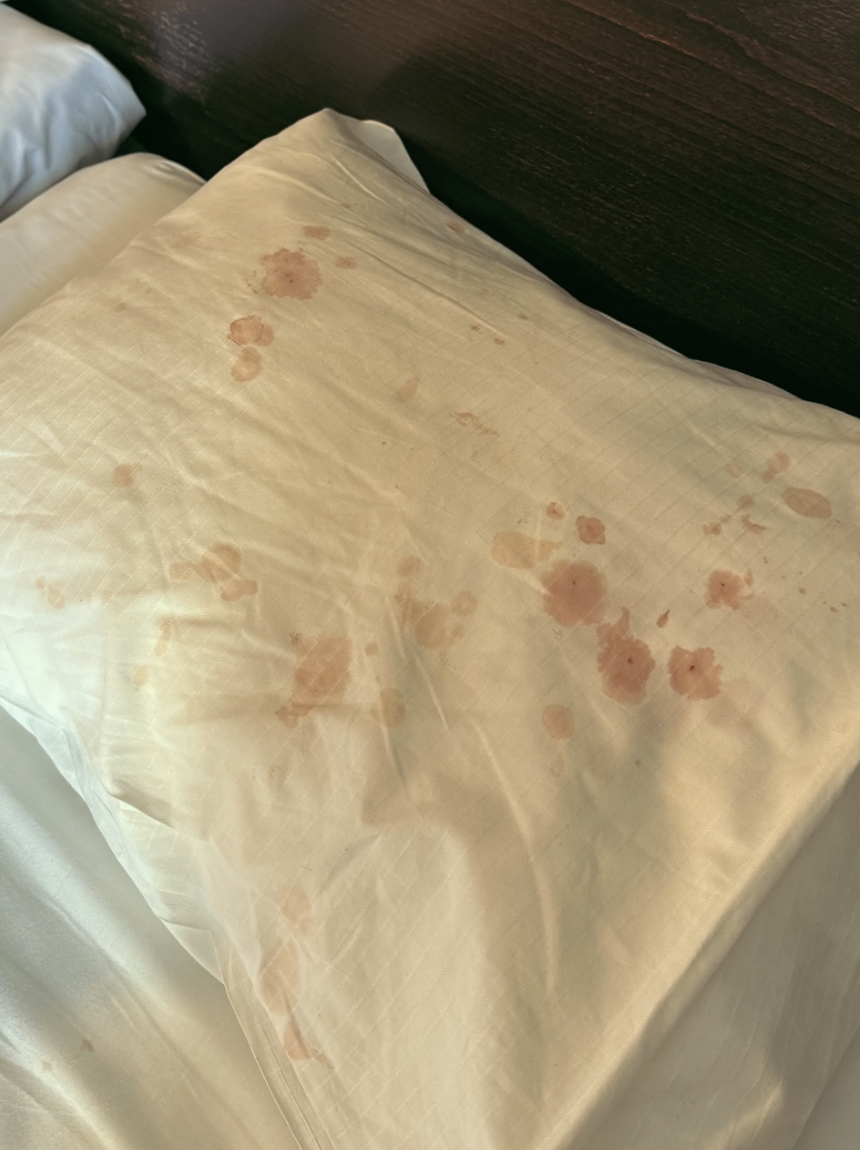
Cliff diver and world champion Robin Steiner after bursting his eardrum
The Statistics
Water trauma is the most common cause of traumatic eardrum rupture among those aged 13–18, and the second most common overall.4
Clinical guidance recommends strict dry ear precautions for all patients with a known perforation: no water entering the ear canal or swimming. Surface activities may be acceptable with well-fitting earplugs and no active infection.1,5
When It Becomes More Serious
The eardrum does more than transmit sound. It also acts as a physical barrier protecting the middle ear from the outside world. When that barrier is gone, bacteria and fungi from water or the environment can enter the middle ear directly.1
If a perforation does not heal on its own, or if repeated infections occur, the risks compound. Chronic infection can lead to middle ear disease and, in more serious cases, a condition called cholesteatoma, an abnormal skin growth in the middle ear that can erode bone structures and cause permanent hearing damage.1
This is why treatment guidance emphasizes keeping the ear dry during healing, and why clinicians consider ear protection a key factor in whether a patient with a known perforation can safely return to the water.2,5
Treatment
Most acute perforations are managed conservatively. Clinicians typically recommend a 4-to-6-week observation period to allow the membrane to heal on its own, with careful monitoring and instructions to keep the ear dry.1
When spontaneous healing does not occur, several surgical options exist, from simple patch techniques suited to small perforations, to more involved procedures like tympanoplasty for larger or more complex defects. Success rates are generally high when performed by experienced specialists.1
Why Choose SurfEars?
For surfers, kitesurfers, cliff jumpers, and anyone taking high-impact hits in the water, the mechanism of traumatic eardrum rupture is well established: the ear hits water at high speed, causing a sudden pressure wave to travel through the ear canal and strike the eardrum with significant force.3 The SurfEars mesh allows air and sound to pass through, but not instantly, and not without resistance. That resistance slows and distributes the pressure wave before it reaches the eardrum, working like a pressure brake that reduces the intensity of sudden impact. This is why users in high-impact water sports experience added comfort and protection.
Research indicates that surface water activities with a known eardrum perforation may be acceptable when ear protection is used and there is no active discharge or infection.5 SurfEars can be a practical option during recovery for surface-level water sports, provided the fit is secure and the earplugs seal properly. We do not recommend SurfEars as a substitute for medical advice, and diving should be avoided entirely during the recovery period.
SurfEars are made from soft, medical-grade silicone and come with multiple size options to fit 99% of ear canals, because protection only works if the plug stays in place. They are designed for a secure fit through dynamic movement, wipeouts, and the full force of water impact.


Take care of your ears, you only get one pair. 💙
Want to learn more? Check out The Science of Surfer’s Ear and The Science of Swimmer’s Ear to read more about common ear conditions, and How to Find the Right Earplug Size to find the perfect fit for your ears.
Recommended products
-

SurfEars 4.0
€54.95 -

SurfEars Junior
€40.00 -

dBud | Volume Adjustable Earplugs | Charcoal
€49.95 -

dBud | Volume Adjustable Earplugs | Dusty Pink
€49.95 -

Organic Tee – Stormy Blue
€49.00


This article is for informational purposes only and does not constitute medical advice. If you suspect a ruptured eardrum, consult a qualified healthcare professional.
References
1 Sutton AE, Weimer AD. Tympanic Membrane Perforation. [Updated 2025 Dec 1]. In: StatPearls [Internet]. Treasure Island (FL): StatPearls Publishing; 2026 Jan. Available from: https://www.ncbi.nlm.nih.gov/books/NBK557887/
2 Harvie M, Roy CF, Gurberg J. Traumatic tympanic membrane perforations. CMAJ. 2024;196(3):E100. doi:10.1503/cmaj.230868
3 Rybak LP, Johnson DW. Tympanic membrane perforations from water sports: treatment and outcome. Otolaryngol Head Neck Surg. 1983;91(6):659–662. doi:10.1177/019459988309100613
4 Carniol ET, Bresler A, Shaigany K. Traumatic tympanic membrane perforations diagnosed in emergency departments. JAMA Otolaryngol Head Neck Surg. 2018;144(2):136–139. doi:10.1001/jamaoto.2017.2860
5 Wang MC, Liu CY, Shiao AS, Wang T. Ear problems in swimmers. J Chin Med Assoc. 2005;68(8):347–352. doi:10.1016/S1726-4901(09)70174-1