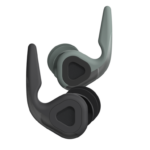
Blocks water. Lets sound in.
Stays securely in place.
Trusted by 500,000 surfers,
swimmers, divers and kayakers.
📦 Free Shipping When You Buy 2 Pairs
🔄 Easy Returns
⭐ 4.8/5 from 900+ verified reviews
♻️ Made with recycled ocean plastic
What’s included?
1 pair of SurfEars earplugs with a secure, stay-in-place fit (size L wings, M gels) plus a detachable leash
Premium silicone case with magnetic closure, ventilation holes for drying, and a carabiner for easy carry
Multiple sizes of gels (XS, S, M, L) and a wingless option — ensuring a comfortable, secure fit for almost all ears
More Info
August 29, 2025
Interview with Matthew David Kaplan – Ocean Filmmaker, Dive Expedition Leader & SurfEars Ambassador
From his first dive in the Bahamas to leading expeditions across the globe, filmmaker and dive leader Matthew David Kaplan has built a life around the ocean. His camera captures both its beauty and its fragility, with the aim of inspiring action. As a SurfEars Ambassador, he also shares how protecting ear health has been a game changer in his career. In this interview, Matthew shares his journey, his work, and his perspective on the ocean’s future.
Photo: Collin M. O’Brien (@oceanscollin)
Personal Connection & Background
Can you share the story of how you first fell in love with the ocean? Was there a moment that shaped your path toward filmmaking and conservation? My first dive was in the Bahamas back in 2002, when I was 18. That was it, I was hooked. A few years later I studied abroad in Sydney, Australia, where I got my Open Water certification, and spent as much time as I could underwater. The real turning point came in 2013 on my first trip to Indonesia. I had just bought a GoPro Hero 3, started filming, and everything changed. That trip made me realize the ocean was not just something I loved, it was something I wanted to dedicate my life to protecting and sharing. It would take years until that dream became reality.
What do you feel when you descend beneath the surface, and how does that sense of connection translate into your work? Perfect serenity. Diving is a living meditation for me. Everything slows down, my mind clears, and I feel part of something bigger. That peace is what drives my work, it reminds me why these ecosystems matter. Most people do not realize that half the oxygen we breathe comes from the ocean. If we destroy the ocean, the planet will follow.
Are there any icons or role models in diving, filmmaking, or conservation who have inspired your journey? David Attenborough, Paul Watson, and the Seaspiracy team shaped how I think about storytelling and impact. They showed what is possible when film is used to inspire. They balance showing the destruction we as humans are bringing to the ocean with educating the world on urgent solutions.
Ocean Filmmaking & Storytelling
How do you balance showing the beauty of the underwater world with the urgency of the threats it faces? It is a balance I think about all the time. If you only show horror and destruction, people lose hope and shut down. If you only show beauty, you ignore the crisis. For me, it is always about hope. There has to be a way forward.
Can you describe a moment while filming when you thought: “The world has to see this”? Raja Ampat is the most biodiverse region of the ocean, home to more than 1,600 species of fish and 75% of coral species on Earth. When I first dived there nearly a decade ago, I could not believe my eyes. It was overwhelming in the best way. Things have changed drastically since. For a first-time diver in Raja it is still spectacular, but they cannot imagine what it was like just a decade earlier. In the Dampier Strait, sites like Yenbuba, Sawandarek, Chicken Reef, and Blue Magic have been ravaged by rising sea temperatures and untreated sewage. That contrast of beauty and destruction hit me hard, and I know I need to tell that story.
What are the biggest challenges of filming underwater compared to land-based storytelling? Conditions. Everything is moving, me, the animals, the currents. Visibility changes by the minute. Lighting is tricky, colors fade, and tiny particles drift through the water and ruin shots. It is beautiful, but tough.
Dive Expeditions & Community
You have led expeditions in places like Indonesia, Baja California, and Bonaire. Which expedition has left the deepest mark on you, and why? All of them have been special, but Bonaire will always stand out because it was the first. Ten people trusted me to lead them on an incredible week of diving, storytelling, and connection. And my dad joining was the icing on the cake. It was also where I began working with groups like STINAPA Bonaire, Sea Turtle Conservation Bonaire, and Reef Renewal. That showed me expeditions can be more than just diving. They can be about learning, collaboration, and making a difference.
Do you have any expeditions coming up in the near future? My girlfriend Dania (@dania_peru) and I have some exciting plans. We are preparing to launch a new endeavor. In the meantime, we will be leading dive expeditions in the Maldives, Malapascua, Alor, and Baja California, with more to come in the years ahead.
How do you think about safety and handling unexpected situations underwater? Stay calm. Problems happen, it is part of diving. Training, preparation, and experience kick in when things go sideways. My mom drilled “safety first” into me from a young age. Even with something as small as leftovers, her rule was always when in doubt, throw it out. That mindset stuck with me. On expeditions, guest safety is always the first priority, followed closely by protecting the ecosystems we visit. We try to leave every place just a little healthier than when we arrived, whether through conservation work, volunteering, storytelling, or donations to local ocean nonprofits.
What advice would you give aspiring divers to ensure a safe and meaningful experience? Two big tips. First, when getting your Open Water certification, do it somewhere with shore diving like Bonaire or Egypt. It is much easier to learn this way than jumping straight off a boat. Second, even as you gain experience, keep practicing the basics. Recover your regulator, get used to diving without a mask and putting it back on, work on buoyancy. These skills build confidence and keep you ready for anything. And once you are underwater, look closely. Pay attention not only to the fish and coral but also to what is missing or changing. That is how you start to see the bigger picture.
The Ocean: Beauty, Threats & Inspiring Action
Why do coral reefs matter so much, and what changes have you seen in them over your career? Coral reefs support a quarter of all marine life, feed hundreds of millions of people, and protect coastlines. For me, they are the most beautiful thing in the world, full of color, movement, and endless surprises. But I have also seen heartbreaking changes, from bleaching and disease to sewage runoff and overfishing. Even in Raja Ampat, the impacts are clear. The hopeful part is reefs can be resilient. With protection through no-take zones, restoration, and local action, they can bounce back. If we give them the conditions they need, they have a chance to evolve to withstand warmer seas.
From your perspective underwater, how do human impacts show up, and how do you balance showing beauty with the urgency of threats? Climate change and human activity reveal themselves clearly underwater. Coral bleaching, algae overgrowth, fewer fish, and less diversity show ecosystems unraveling in real time. I think it is important to show both beauty and destruction. People need to fall in love with the ocean, but they also need to understand what is at stake.
What message do you want people and policymakers to take away, and have you seen your storytelling spark change? We do not have more time. Pure capitalism is good at making billionaires and growing economies at all costs, but not for the planet, life on it, or even long-term human survival. We need to accept that a more balanced way of living is superior, because without changing how we live and consume, the planet will not be habitable for humans. That might sound extreme, but I wish we could all hear these words from our unborn great-grandchildren who do not have a voice in this conversation and will never get the opportunity to report back to us.
Vision & Future
What is your biggest dream project, the story you have not told yet but hope to capture? I am working on a film in Alor, Indonesia that is close to my heart, telling the story of local families and their deep connection to the ocean. It will explore how traditions, daily life, and survival are tied to the health of the sea. Beyond that, my dream is to create a series that blends science, local culture, and conservation across regions. I want to spotlight people on the frontlines of ocean change, the communities who depend on it most, and the scientists working to protect it. The biggest untold story is not just the ocean itself, but the human connection to it.
Where do you see ocean filmmaking heading in the next 10 years? More accessible than ever. Technology keeps getting better, smaller, and more affordable, which means more people can share their stories. The most important shift will be seeing storytellers come directly from coastal communities. For too long, many stories have been told by outsiders. The future is local voices leading the way, telling their own stories about the waters they live beside and depend on.
If you could change one thing about humanity’s relationship with the ocean, what would it be? For people to experience it firsthand. Once you dive or even snorkel, you cannot see the ocean the same way again. That connection is powerful. It changes the way you live on land, the choices you make, and how you understand your place in the world.
What keeps you diving back in, what is the “why” at the heart of everything you do? The ocean is my higher power. It is where I feel at home, where I find clarity, and where I can give something back. Every dive reminds me what is at stake, from the beauty that still thrives to the damage already done. Diving keeps me grounded and motivated to keep telling these stories and to keep pushing for change.
Equalization & Ear Health
Why did you become an ambassador of SurfEars? As a professional scuba diver with thousands of dives over two decades, my arch enemy has been ear infections. I am often doing three or four dives a day in areas that have bacteria, algae, and plankton in the water column. Over the years, I have too often had painful ear infections that forced me to miss dives and sometimes even stay in bed, despite rinsing with water, alcohol, or vinegar after dives. When I tried SurfEars at the beginning of this year, it was a game changer from the first dive. Since then, I have not had a single infection. On top of that, they also prevent surfer’s and swimmer’s ear and protect long-term ear health.
Many people are curious about how equalization actually works when diving. How do you explain it in simple terms, and how has SurfEars supported you in that process? Equalization is making sure the pressure inside your ears matches the pressure outside as you descend. The only true air pocket in the body is inside the ear. You pinch your nose, blow gently, and open your Eustachian tubes so the pressure equalizes and your ears do not get squeezed. With SurfEars, I can protect my ears from cold water and infections without losing the ability to equalize. Equalizing with SurfEars is just as simple, easy, and safe as equalizing without them, no matter how deep I go or how fast I descend or ascend. I can attest to that after hundreds of dives with SurfEars.
Can you describe a moment where ear protection made a real difference during your diving or filming work? There have been plenty of dives where conditions were rough, cold water, long days filming. Without ear protection, I would be dealing with infections, pain, and downtime. SurfEars keep me in the water and filming, which for me is everything.
What message would you give to divers, surfers, and other water athletes about ear health and long-term hearing? Educate yourself. Many people assume they cannot wear earplugs because they need to equalize, but they do not realize SurfEars are designed specifically for this. They protect your ears without stopping you from equalizing, and that can save you from long-term damage.
Quick 5
Favorite dive spot in the world?Raja Ampat, Indonesia, though it is under serious threat from rising sea temperatures, pollution, and untreated sewage.
A marine creature you could watch for hours?Octopus.
Most essential piece of gear (besides a camera)?My Scubapro S620 Ti regulator. It breathes so smoothly it feels like I just think about breathing and the air flows into my lungs.
Coffee before a dive, yes or no?I save it for after the dive. I like to be fully relaxed before going in.
If you were not diving, what would you be doing?Probably still storytelling in some form and bringing people together, but diving gives me the perspective and purpose I cannot find anywhere else.
What Can We All Do to Protect the Ocean?
We all have a responsibility to protect the ocean, and there are meaningful actions we can take:
Cut back on seafood and choose sources that are less destructive.
Support no-take marine protected areas that allow ecosystems to recover and thrive.
Ask dive resorts how they treat their sewage and whether they prevent nitrogen and phosphorus from entering the ocean before you book a trip.
Avoid cosmetics made with shark-derived squalane. Plant-based alternatives are widely available.
Raise awareness. Share what you learn, speak up, and support petitions that push local, national, and global policy change.
Donate to or volunteer with organizations working to restore marine ecosystems and protect vulnerable species.
If we act now, there is still time to protect the ocean and give it the space it needs to stabilize and recover so future generations can experience a living ocean, not just watch it on screen from videos taken decades earlier.
Matthew David Kaplan, filmmaker, expedition leader and SurfEars Ambassador, reminds us that to love the ocean is to protect it. His words invite us to dive deeper, not only into the water, but into a renewed relationship with the blue heart of our planet.
All photos were shot by Collin M. O’Brien (@oceanscollin)
You can follow Matthew’s work and adventures here: